
Telehealth Abortion Access in a Changing Legal Landscape
The debate surrounding reproductive healthcare in America has taken on many shapes, and recent developments have brought telehealth abortion access to the forefront of public attention. With a patchwork of state laws and judicial decisions unfolding at a nerve-racking pace, groups like Mayday Health are offering a fresh perspective by providing information on accessing abortion pills safely and reliably. This editorial examines how modern tactics—in both digital and physical forms—are being used to help people get around hurdles and make informed choices about their own bodies.
Recent strategies have been designed to reach people in remote areas and places often left out of traditional healthcare narratives. In regions where traditional medical services may feel intimidating or off-putting due to regulatory restrictions, telehealth abortion services have emerged as a powerful resource. New outreach methods have been deployed by organizations such as Mayday Health to ensure that accurate, non-biased information is available regardless of where one lives.
Reaching Out in Rural Areas with Innovative Advertising
In states like West Virginia, Kentucky, and Texas, the approach to spreading awareness has been as bold as it has been innovative. Mayday Health has recently launched more than 120 billboards and advertisements in small, rural towns—places where community access to reproductive healthcare has historically been limited. By focusing on the gas stations and community bulletin boards in these regions, they are tackling the tricky parts of local access head-on.
These public service messages appear to be more than mere advertisements. They serve as a beacon of information for those discovering that telehealth abortion care is both safe and discreet. For many, this type of outreach is a welcome change in the way reproductive health services are conveyed, especially when local politics and legal obstacles can sometimes make the topic feel overwhelming or confusing.
- Over 120 targeted ads in rural communities
- Billboards placed at strategic high-traffic local sites
- Direct engagement through social media for community feedback
This approach is a testament to the fact that even within regions loaded with issues regarding reproductive rights, there are always ways to find your way to viable healthcare options. The backbone of this strategy isn’t just about advertising; it’s about engaging with communities to ensure that they are well informed and have access to support when needed.
Community Engagement and Grassroots Outreach Tactics
What sets these new initiatives apart is the blend of direct physical outreach and a savvy online presence. For example, when Mayday Health posted an invitation on their Instagram asking people in West Virginia and Kentucky to send a DM if they wanted to meet up, it signaled a movement away from impersonal services towards a more hands-on, community-based approach. This kind of outreach helps to demystify what can often be seen as intimidating or complicated pieces of healthcare, providing a space where individuals can ask questions, share experiences, and feel supported.
In one urban setting, similar methods were employed via billboards along roads frequently traveled by residents with limited local options. These efforts are all about finding your path to safe care. Rather than relying solely on digital channels—prone to censorship or restrictive measures—Mayday Health is turning to analog methods like print media and physical signage, proving that sometimes a direct touch on the community is the most effective way to communicate essential options.
Adapting to Political Pressures: Bold Moves in a Tense Environment
In an environment on edge with political maneuvering and legal tangles over reproductive rights, Mayday Health has managed to carve out a space for respectful defiance. By openly challenging state officials known for their anti-abortion stance, such as the red-state governors and prominent political figures, they have not only publicized their services but also sparked discussions about how state-level politics affect personal healthcare decisions.
This movement has extended beyond just state lines and into more symbolic territories. For instance, in Florida, where political figures have actively tried to restrict abortion care, Mayday Health’s floating advertisement—a boat cruising the Gulf of Mexico along the popular beaches from St. Pete’s to Clearwater—serves as a reminder that the fight for reproductive rights moves beyond courthouse battles and legislative sessions. It’s a statement of resilience and independence in the face of opposing politics.
Maritime Messaging: Sailing as a Symbol of Defiance
The sight of a boat floating along Florida’s renowned coastline isn’t just a dramatic stunt; it sends a potent message. By using this nautical symbol, Mayday Health is telling the public that access to reproductive care should not be hindered by state-imposed borders or regulatory challenges. This mobile form of advertisement is designed to literally sail through the twists and turns of political adversity, reaching audiences that might otherwise never see such explicit affirmation of women’s rights.
For many people, particularly those living in coastal regions or near tourist areas, the presence of a boat carrying a clear and direct message about abortion care provides a refreshing yet empowering perspective. Instead of feeling boxed in by overwhelming political rhetoric or overly cautious messaging, these displays encourage critical thought and dialogue within communities about the importance of bodily autonomy.
Billboards and Print Media: Reclaiming the Public Space
Alongside its maritime campaigns, Mayday Health has embraced traditional print media to stir conversation and provide a sense of accessibility. Billboards in cities like Amarillo, Texas, and around the Iowa State Fair have taken center stage in promoting telehealth abortion options. In Amarillo—in a city that has witnessed federal attempts to impose nationwide bans—the presence of these billboards, coupled with the support of local healthcare professionals such as ER physicians, underscores the timely need for accessible information.
One local doctor remarked in a video posted on social media: “Did you know that if you don’t want to be pregnant, you still have options?” This powerful message not only challenges preconceived ideas about reproductive care but also directly encourages patients to explore their options without hesitation—even if that means querying the confusing bits of new policy or clarifying the little details involved in accessing care outside conventional systems.
- Billboard campaigns in multiple states
- Print advertising in local newspapers on commemorative dates
- Integration of local medical expert opinions and testimonials
These efforts illustrate how carefully designed public messages can cut through the tangled issues and intricate political messaging that often sways public opinion. They harness a dual-purpose approach: affirming the veracity of telehealth services while critiquing policy changes that have, in many ways, narrowed the pathways to secure reproductive care.
The Role of Telemedicine in Expanding Abortion Access
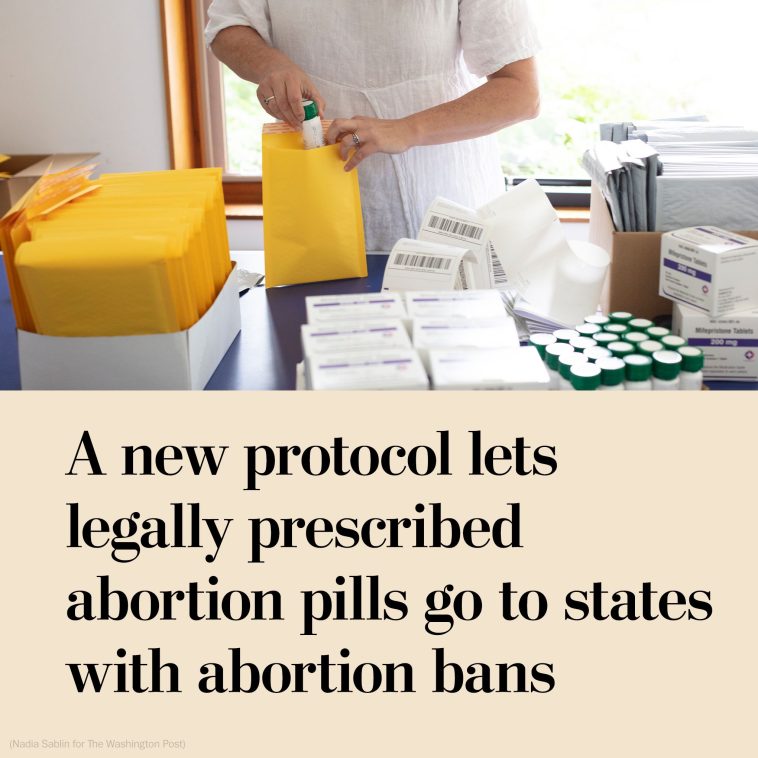
At the heart of this entire discussion is the growth of telemedicine—a practice that is revolutionizing access to reproductive healthcare across the United States. For individuals in states where in-person abortion services may be challenging or downright off-limits, telehealth can offer essential and discreet care delivered straight to their doors.
Telemedicine providers operating under state shield laws are making it possible for clinicians to serve patients far beyond traditional geographic boundaries. This evolution in healthcare delivery is especially critical in regions where legal battles restrict or even criminalize conventional medical practices in the reproductive sphere.
Embracing Technology: Telehealth Providers Leading the Way
Institutions such as Abuzz, Aid Access, The MAP, A Safe Choice, and We Take Care of Us have spearheaded a revolution in how reproductive healthcare can be accessed. These providers are not merely offering a service—they are building a network that stands resilient amidst changing state mandates and judicial interpretations. Their models are designed with flexibility in mind, allowing for sliding scale fees and rapid, usually 3-5 day, delivery of abortion pill packs.
Recent research showcases impressive numbers: between July 2023 and September 2024, the organization Aid Access provided over 118,000 medication abortion pill packs across 2,639 counties in the United States. Notably, 84 percent of these were dispensed in states where in-person clinics were nearly non-existent because of stringent local laws. These figures emphasize how telehealth is quietly reshaping the landscape of reproductive rights by ensuring that even in places under legal strain, safe and effective care is within reach.
- Over 118,000 pill packs distributed by a single provider
- Support for communities where conventional care is nearly banned
- Rapid turnaround times ensuring timely access to care
Such innovative practices highlight the essential role technology now plays in health care delivery. When traditional avenues become closed off, telehealth provides the key to unlocking the door to safe abortions and comprehensive reproductive care, even if accessing it feels at first like steering through a storm.
State Shield Laws: Protecting Providers and Patients
The implementation of telehealth services has also been bolstered by state shield laws. These laws were designed to protect healthcare providers and patients, ensuring that service delivery could continue despite the controversial local shifts in policy regarding reproductive rights. Shield laws effectively create a safe zone where both providers and patients are free to make decisions about their healthcare without fear of retribution or legal entanglements.
In practice, these legal frameworks have allowed the number of month-on-month telehealth abortions to soar. Recent data from the Society of Family Planning showed a significant rise in numbers when comparing the early months of 2024 to the final quarter. In many shield states, healthcare professionals provided nearly 14,000 abortions in a single month by December 2024. This sustained increase demonstrates how technology and progressive legislation can work in tandem to ensure that, wherever you may be, avenues for safe healthcare remains open and covered.
The Influence of Public Information Campaigns on Community Health
It is not only the advent of telehealth and the legal structuring around it that is making waves in the public sphere—it’s also the community outreach and public information campaigns championed by groups like Mayday Health. These campaigns serve as both a call to arms and a source of reassurance for people navigating the overwhelming or confusing bits of reproductive care guidelines in their area.
By taking a closer look at their various initiatives, one can see how critical it is for such campaigns to be both wide-ranging and multi-layered. For instance, take the work done at the Indy 500 in Indianapolis. For three consecutive days, Mayday Health flew an airplane above the raceway that drew attention from more than 4.2 million people—a public display that garnered coverage from media outfits across the political and cultural spectrum, from Axios to Breitbart.
Using Major Public Events to Spread the Message
Large public events like the Indy 500 provide a unique platform to catch the eye of a diverse audience in a way that traditional media might not. This strategy is smart: it engages people on multiple levels, from casual sports fans to committed activists. By turning a high-profile event into a forum for educating the public on reproductive choices, Mayday Health helps to chip away at the little twists and shades of misinformation that have long marred the conversation around abortion pills.
This campaign is important for several reasons:
- It leverages the attention of large gatherings to spark crucial discussions.
- It makes use of vivid imagery and direct messages to challenge outdated perceptions.
- It shows that even amid state-level pushback, there is a strong public desire for simple, straightforward information about healthcare options.
By embracing public events, these information campaigns remind their audiences that reproductive healthcare is not a fringe issue; it touches every community. Establishing public awareness through familiar venues helps reduce the perceived fear associated with reproductive health services and makes the entire process feel less intimidating.
Engaging Social Media for Personalized Outreach
Social media platforms have become indispensable in today’s communication strategy, and organizations like Mayday Health harness these channels to break down the fine points of obtaining abortion care. Posts on platforms like Instagram have been used to both invite conversation and share practical advice. For example, when an individual noted that seeing an abortion pill billboard made them feel safe, it underscored one of the core goals: to instill a sense of security even in challenging environments.
These online engagements work by offering:
- Direct communication channels where individuals can ask questions and get tailored advice.
- Real-time updates on service availability and policy changes.
- Personal stories and testimonials that help demystify the process of accessing telehealth care.
By combining both online and offline methods of communication, public information campaigns ensure that the message reaches a broad spectrum of people. Whether someone is in a bustling city center or a small, rural town, the information is near at hand, allowing them to feel empowered to make their own informed decisions.
Understanding the Broader Implications of Abortion Pill Access
Modern reproductive healthcare is rarely just about one tool or one medication—it’s about creating an ecosystem where a variety of options are available, regardless of where someone lives. The recent surge in attention to telehealth and abortion pills underscores key changes in how healthcare policy, technology, and activism intertwine.
While those who oppose telehealth abortion care may argue over the tricky parts of statutory interpretation and legal jurisdiction, the data speaks for itself. The numbers reveal that when people have access to telehealth services, they are more likely to use safe and effective methods for addressing unintended pregnancies—even in areas where traditional options have been restricted or rendered nearly impossible.
Shifting Public Opinion Amid Legal and Policy Challenges
As public sentiment continues to evolve, opinions on abortion are beginning to shift. Much of this change can be attributed to robust educational campaigns that take a closer look at both telehealth services and the stark realities imposed by recent judicial decisions.
For example, one billboard posted near Washington D.C. boldly stated, “Abortion Is More Popular Than Ever. Thanks, Guys!” featuring an image of the Supreme Court justices who voted to overturn Roe v. Wade. While the message was provocative, it served as a subtle reminder that real change comes when the public is fully aware of how regulations impact their personal health choices. This kind of messaging takes aim at the hidden complexities of legal reform, inviting citizens to question established narratives and embrace a wider perspective on healthcare autonomy.
Key areas where public opinion might benefit from further clarification include:
- The safety and effectiveness of medication abortion.
- The speed and reliability of telehealth providers.
- The personal empowerment that comes from having multiple healthcare options.
- The impacts of state laws on local communities and individual lives.
By promoting clear, well-supported facts over politically loaded rhetoric, public campaigns can work to ensure that the confusing bits of misinformation are replaced by straightforward, actionable knowledge. Their ultimate goal is to help individuals steer through policy shifts and feel confident in their right to choose.
Measuring the Impact: Data and Real-Life Outcomes
Assessing the effectiveness of these public campaigns involves examining both numbers and personal testimonials. Studies have shown that with the increased awareness of telehealth options, healthcare facilities operating under shield policies experienced a significant rise in patient numbers. For instance, information from the Society of Family Planning highlights that clinics in shield states saw an uptick from an average of 8,747 monthly procedures in the first quarter of 2024 to a peak of nearly 14,000 in December of the same year.
These trends point to several important outcomes:
- The more people are informed about their options, the more likely they are to seek safe care.
- Telehealth services help bridge the gap in communities where local resources are scarce.
- Data-backed outcomes provide reassurance that these methods are not only safe but also in high demand among those who might otherwise be left behind.
In addition to quantitative data, personal testimonies shared on social media and local news outlets provide a human face to the statistics. When a young person expressed gratitude for knowing about abortion pill access as a teen, it served as a powerful reminder that information can make all the difference in moments of personal crisis. Each story, told with care and honesty, reinforces the idea that every individual deserves to make decisions about their own body without interference or fear.
Taking the Wheel: Empowerment Through Knowledge and Access
At its core, the movement for expanded telehealth abortion access is a call for empowerment. It is about ensuring that everyone, regardless of geographic or political barriers, can find their way to healthcare when they need it most. Whether you live in a rural town far from major medical centers or in a city brimming with diverse healthcare facilities, the right to choose remains a super important piece of a society that values personal freedom.
This empowerment stems from the combination of modern technology, creative outreach, and supportive legal frameworks. When people have a reliable source of information—whether provided through physical billboards or digital platforms—they are better positioned to tackle the twists and turns of healthcare access with confidence.
Practical Support for Patients in Transition
Understanding that healthcare needs are often loaded with issues, many telehealth providers not only offer medication but also provide comprehensive support. This includes:
- Telephonic and online counseling: Ensuring that patients fully understand the process before, during, and after receiving care.
- Sliding scale fees: Making access affordable to a wide range of socioeconomic groups.
- Follow-up services: Offering additional medical guidance if complications arise or if further advice is needed.
Providers recognize that the process can sometimes feel overwhelming. They take a patient-centered approach by breaking down the complicated pieces of care into clear, manageable steps. This emphasis on personalized care helps reframe reproductive health—not as a topic shrouded in fear—but as a vital part of overall wellbeing that every individual deserves to manage confidently.
Community Resources: Finding Your Support Network
Community-based resources also play a critical role in this transformed landscape. Local clinics, healthcare hotlines, and even supportive social media groups all serve as reliable touchpoints for those who might be uncertain about how to move forward. The multi-layered support system not only makes it easier for people to get the care they need but also helps challenge the narrative that reproductive health is a solitary struggle.
Key community resource elements include:
- Local forums: Spaces where community members share personal experiences and encourage one another.
- Support groups: Peer-led groups that offer emotional and logistical support through every step of the process.
- Educational workshops: Sessions designed to break down hidden complexities of the healthcare system and explain patients’ rights.
When community voices come together, they create a network that amplifies the message of safe, accessible telehealth services. This grassroots support is not only informative—it is also a powerful reminder that healthcare decisions should always be personal choices, free from party politics or bureaucratic red tape.
Charting a Future of Equitable Reproductive Healthcare
Looking ahead, the future of reproductive healthcare in the United States will largely depend on how well these creative strategies can coexist with rapidly shifting legal and political conditions. As long as there remain states where traditional access to abortion is mired in intense debate and regulatory obstacles, the role of telehealth and community-based initiatives will only grow in importance.
The narrative is changing, one billboard, one social media post, and one boat cruising along a Gulf Coast beach at a time. New policy challenges and political tussles might continue to create confusing bits of regulations, but the response by organizations committed to reproductive rights remains resolute. They are determined to ensure that every individual can figure a path to safe healthcare, regardless of where they live or what state laws say.
This transformation is not solely about healthcare—it’s also a cultural shift. It represents a move towards a society where personal autonomy and informed decision-making are held as key principles. Whether you’re a concerned parent, a young adult contemplating your options, or a seasoned advocate for women’s rights, the steady mediating force of telehealth abortion access offers a reassuring sense of stability in an otherwise turbulent arena.
Policy Implications and the Road Ahead
There are many policy implications that emerge from the successful rollout of new outreach methods and telemedicine services. For one, the data increasingly supports the idea that when healthcare is made available in a safe, accessible manner, the rate of complications decreases while satisfaction increases. This evidence-based approach can encourage state policymakers to rethink restrictive laws, moving towards frameworks that respect personal freedom while ensuring public safety.
As more states witness the real benefits of telehealth services through improved medical outcomes and reduced burdens on local clinics, there is ample room for dialogue on how best to craft legislation that protects both providers and patients. Such policies would not only remedy the current state of tangled issues and off-putting legal obstacles but could also serve as a model for other countries facing similar challenges.
Supporters of telehealth abortion care argue that sharing success stories—both in terms of improved health outcomes and community engagement—can help shift public opinion. The consistent, reliable data emerging from high-volume providers like Aid Access serves as proof that when citizens are informed and empowered, they can and do make safe decisions. These positive outcomes might well pave the way for further adoption of telehealth solutions in other critical areas of healthcare.
The Need for Continued Research and Community Vigilance
It is also super important for the community and policymakers alike to continue closely monitoring how these changes impact public health. Rigorous research is essential to understanding the subtle details behind the increased use of telehealth services and their broader impacts on society. This research must explore several core questions:
- How do telehealth interventions compare with traditional clinical methods in terms of patient outcomes?
- What are the small distinctions in accessibility between urban and rural populations?
- How do policy changes at the state and federal level directly influence the availability of reproductive healthcare?
Answering these questions can help shape a future where healthcare services are not only efficient but also delivered in a manner that respects personal decisions and community values. This ongoing dialogue between research, policy, and grassroots advocacy serves as the backbone of a healthcare system that aspires to be both inclusive and resilient.
Conclusion: A Call to Empowerment Through Accessible and Informed Healthcare
In a world where regulations are in constant flux and political forces often steer policy decisions, the need to offer safe, accessible, and trustworthy healthcare options has never been more essential. The work undertaken by organizations like Mayday Health is a striking example of how blending technology, public outreach, and legal protections can chip away at the nerve-racking barriers to reproductive care.
From boating along the Gulf Coast to placing billboards in remote communities, these innovative tactics are designed not only to inform but also to empower. They invite individuals to get into the details of their healthcare options, to figure a path that best serves their personal needs, and to steer through any obstacles that may arise along the way.
The journey ahead may at times appear full of problems, but it is clear that when communities are informed and empowered, they can overcome even the most tangled issues. Telehealth abortion access is more than just a service—it is a movement that underscores the belief that every human being deserves the right to choose.
As debates continue and policies are reshaped, it remains a critical goal to ensure that reproductive healthcare is viewed not as an overwhelming challenge, but as a key component of overall health and wellness. With data, community engagement, and continued advocacy leading the way, the future of reproductive healthcare can be one marked by dignity, accessibility, and personal empowerment.
Whether you are a healthcare provider, a community activist, or simply someone seeking clear and trustworthy information, remember that the power to make informed decisions rests with you. Each step taken brings us closer to a society where access to safe reproductive care is a right enjoyed by all, irrespective of geographic or political boundaries.
In bridging the gaps between policy, technology, and grassroots activism, we find hope for a more inclusive future—one where every individual has the must-have access to the services they need to protect their health and shape their own destiny. Now more than ever, it is on all of us to work together and ensure that empowered, informed choices remain at the heart of our society.
Originally Post From https://msmagazine.com/2025/08/22/abortion-pills-mayday-health-billboards-south-midwest/
Read more about this topic at
Empowering Women, Girls to Choose Their Reproductive …
MSI Reproductive Choices: Making choice possible